

The Oneness, The Shema
For Deuteronomy 3:23-7:11

A number of readers wrote that you enjoyed the two short pieces last week from my Map of Freedom collection (upcoming for publication in book form early next year). Here is another short piece from that collection that I will read during Sabbath (Shabbat) services at my home congregation, Congregation Em-anuel/Temple Beth Shalom for my father’s yahrzeit (yearly date of death honoring). He died July 21, 2021.
Map of Freedom collects 52 pieces I have written for each weekly Parashat (section) of the Torah (Five Books of Moses from the Bible). These pieces are written to be read aloud as homilies or meditations. Parashat Va’etchanan is the section of the Torah that this piece reflects.
Parashat Va'etchanan (Deuteronomy 3:23–7:11), the second reading in the Book of Deuteronomy, means "And I pleaded," capturing the pleading of Moses before God, on the east side of the Jordan river, for God to let him and the Jews enter the Promised Land. Among other things, this Parashat features the Shema, a central prayer in Judaism, a daily declaration of faith in the oneness of God. Its core verse in the Torah translates to: "Hear, O Israel: The Lord our God, the Lord is one."
In this piece, as throughout Map of Freedom, God appears in italics and Moses (representing all of us poetically) appears in normal print.
Shema, O Israel, Adonai Eloheynu, Adonai Echad
Most of what human beings think of as broken is growing. Just beyond your sense of broken-ness your best answers lie.
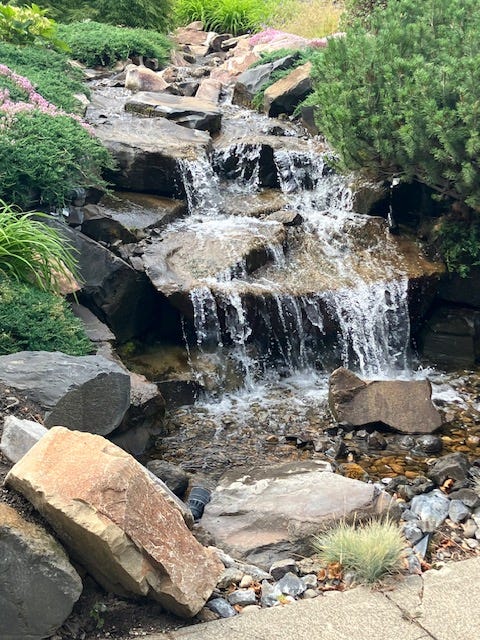
A million times on the journey God says this kind of thing to me. Until this morning’s prayers, I did not hear. But I did hear birdsong at dawn. I heard the flow of water outside my house. I felt anticipation of a day’s kindness and plaints. Every morning, I pray, but somehow, today, I heard God outright.
Sometimes we hear things long after we’ve heard them.
Sometimes we hear things long before we hear them because we believe.
“To eat meat is to kill a creature of God” said the vegetarian at the fundraiser. A group of us had come together in evening dress to give money to her good cause, saving the whales. “To eat meat is to kill God” she heard long ago from someone she admired, or maybe she formed the thought with her own breaking heart. Either way, she was persuasive, and we gave her money, and some desperate whales were saved.
Yet I felt an aching sense of people exaggerating things to get their way. I felt like we all stood there eating celery, with birdsong piped in, wearing masks of our own intelligence, but did we fully understand God’s greatness?
I’ve made my own version of a long journey, and now I’m thinking back a bit. I want a way of living with what “greatness” implies that is more unbroken than broken. I will keep helping the whales because they are huge birds in the sea floating and singing, and their souls are my soul, and they are older than me; but if I live my life running from broken world to broken world, what has the journey of faith been about? I don’t want God to be a lie. I want the whole truth to be realized in a journey of wonder.
A Seventh Day Adventist came to my door. “God is great,” he smiled, his face evangelical (please note “angel” at the center of that word). This was another time I felt exaggeration to some fervent claims of our brokenness, a focus on “Ye must be saved from your original sin,” but I’ve already accomplished a lot of that. I need, now, the unbroken soul. “You know, friend,” I said, “I think I’m just the reader of a different map than you are.”
Only after the evangelist was gone did I thank him quietly: God is indeed great, with no exaggeration needed because most of our world is unbroken, and what is broken calls us to it for repair by we, the energy that will help it to grow. Thank you, evangelist. I understand the truth again, in your different way. May our religions be some of our best records of the great and eternal growing. May enlightenment be a vehicle not just for stasis but for evolution.
When he left, I heard birdsong again, returned to my morning prayers, recalled an ancient mountain walk when the giving of tablets and rules occurred; when, among good people at their work, and children at theirs, salvation was more like retrieval and repair than desperation. Even we who don’t live in the Promised Land can die happy (which means free and loving) because we love and are loved in a world where the choice between joy and sorrow is, often, no choice at all because both are God’s breath.
Unless all this is exaggeration, too; all my words untruths, all thoughts impure, all actions doomed, but no, we are wandering between whole and whole, so entranced by wreckage in the world as to repair it while singing, Hear O Israel, I am the Lord Your God, I am One—even little I, a seed of infinity, and even you, a seed of the whole.
O but when will we know all this about God’s greatness in our bones!
When will we--each of us a miniature universe eternally changing--experience the Oneness?
When will we all admit together, to both mirror and Time, “We are God, thus we are responsible for the whole world?”
When you do this together as One you will enter the promised land.